Antiziganismuskritische Perspektiven in der Medienbildung
29. bis 30.06.2026 in Mainz
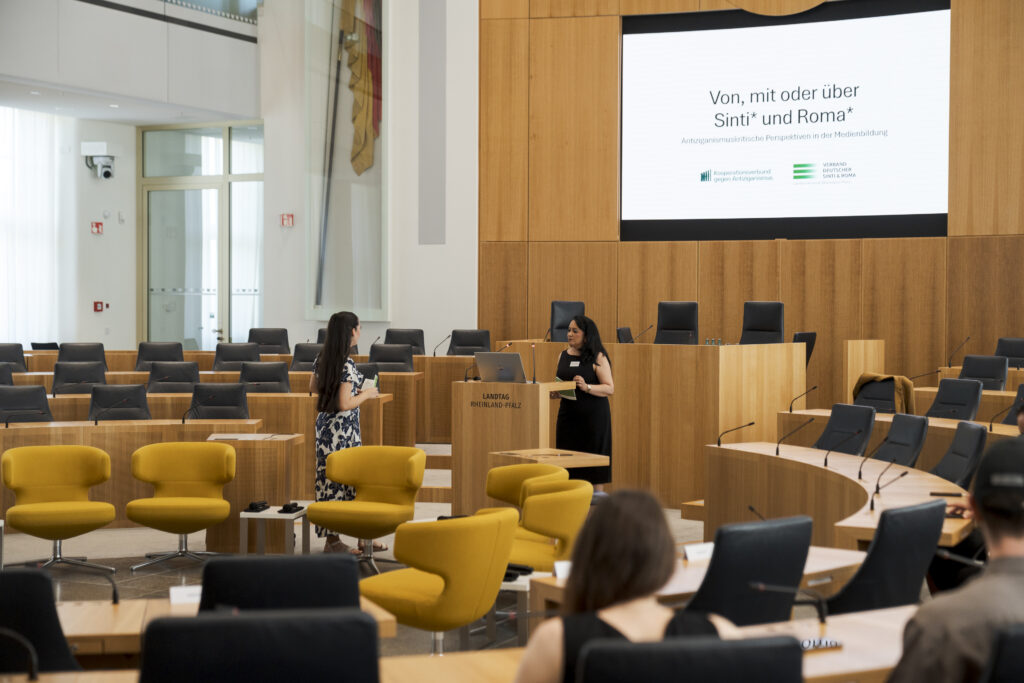
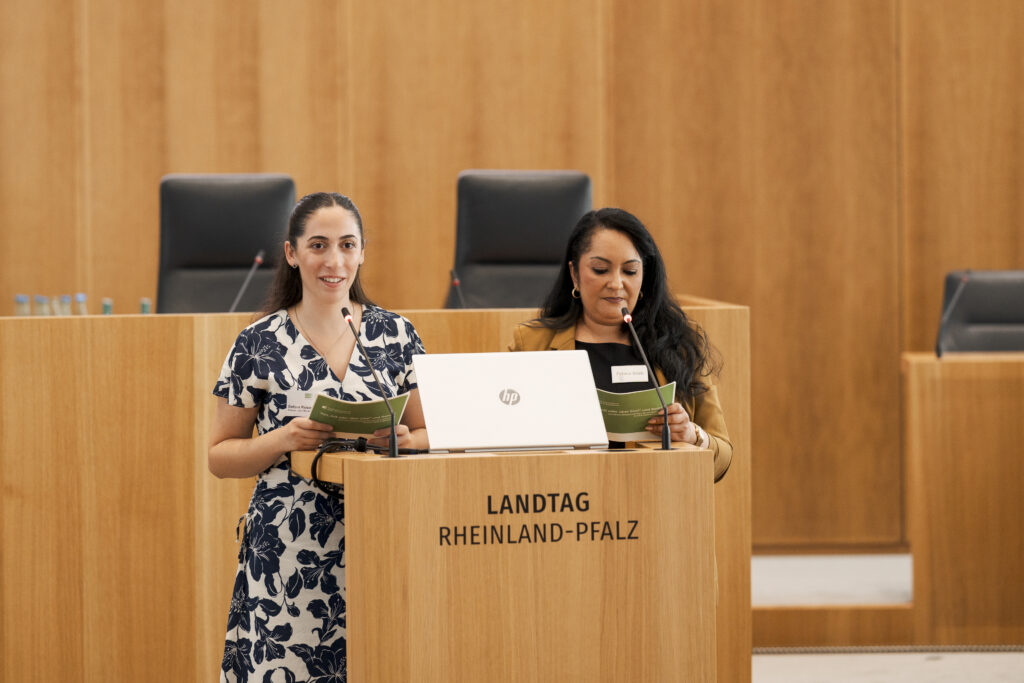
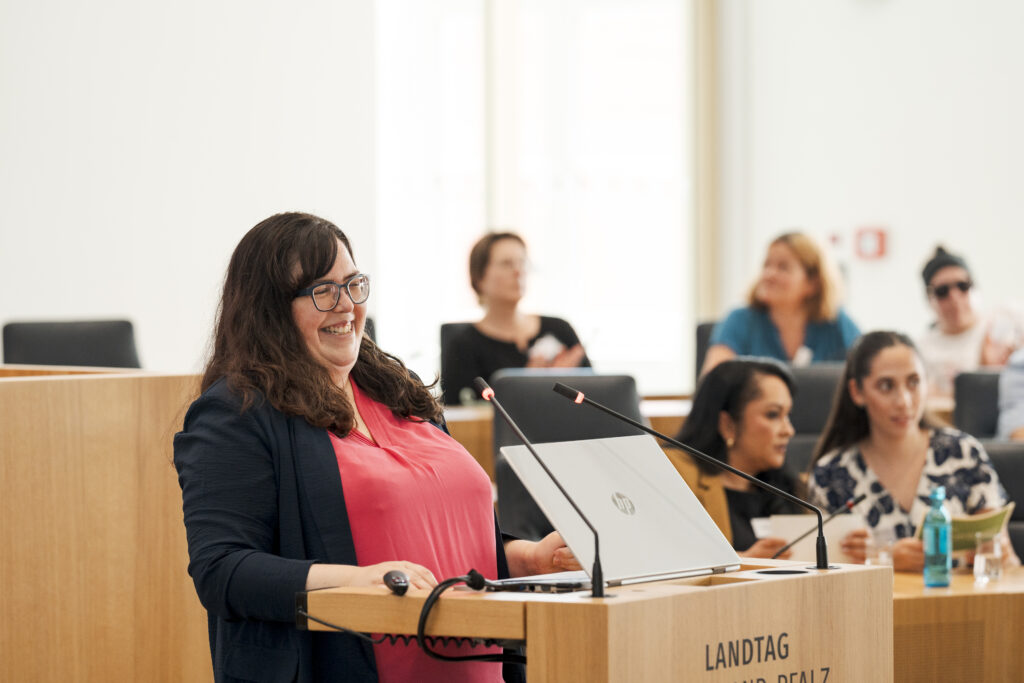
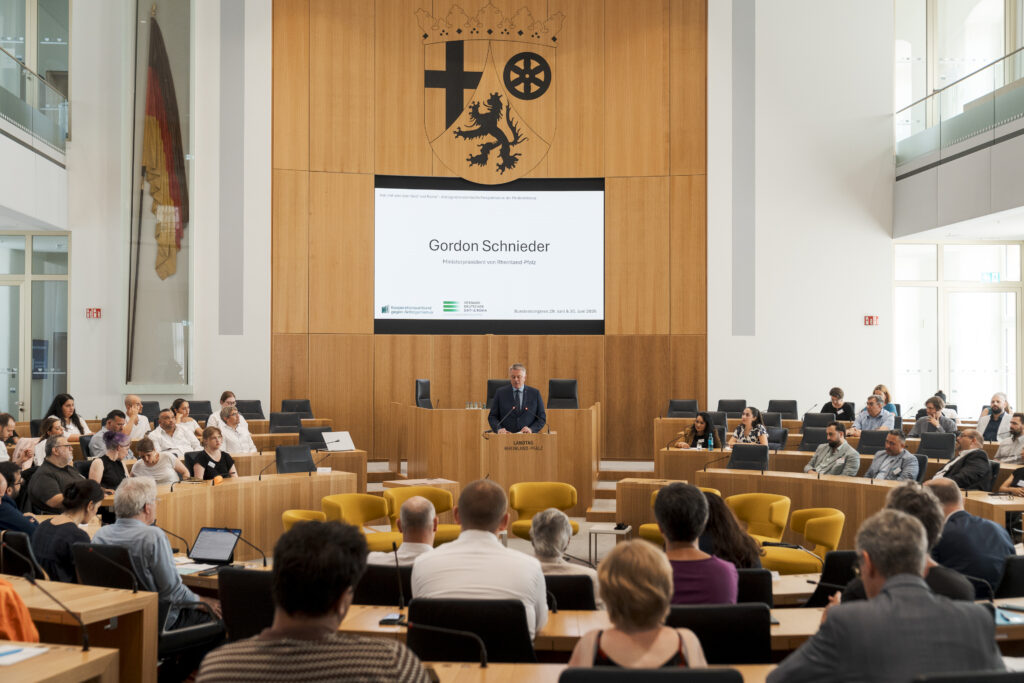
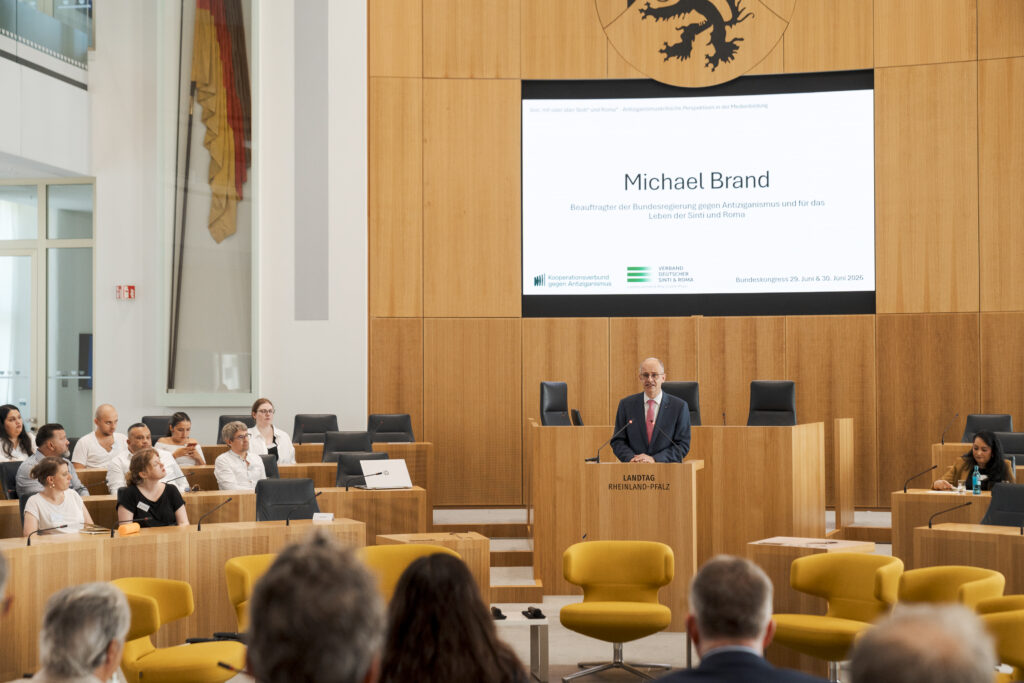
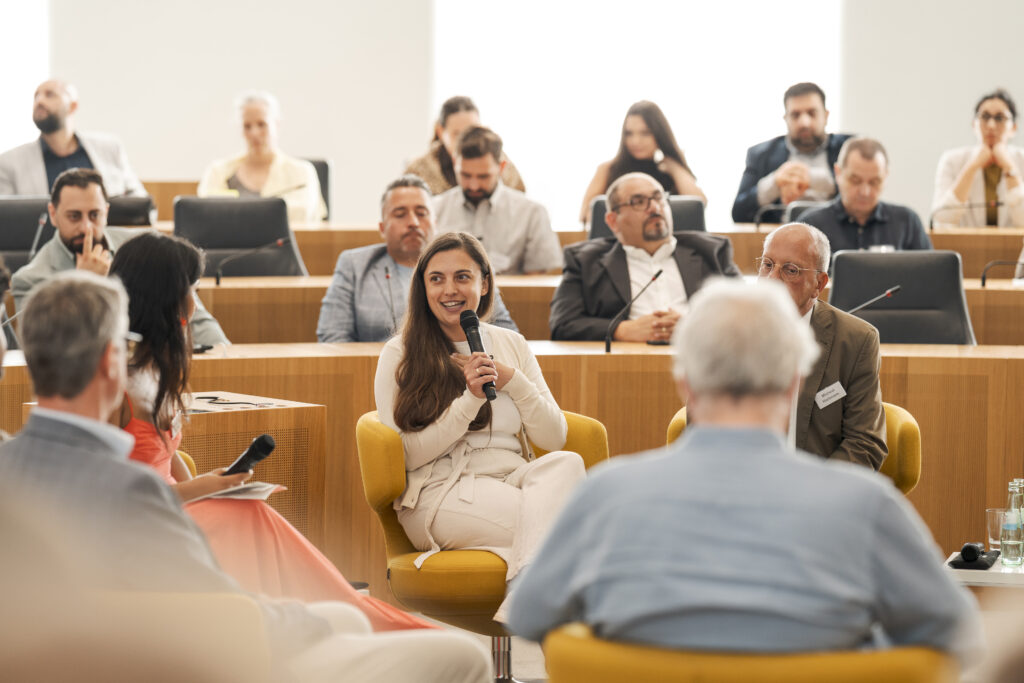
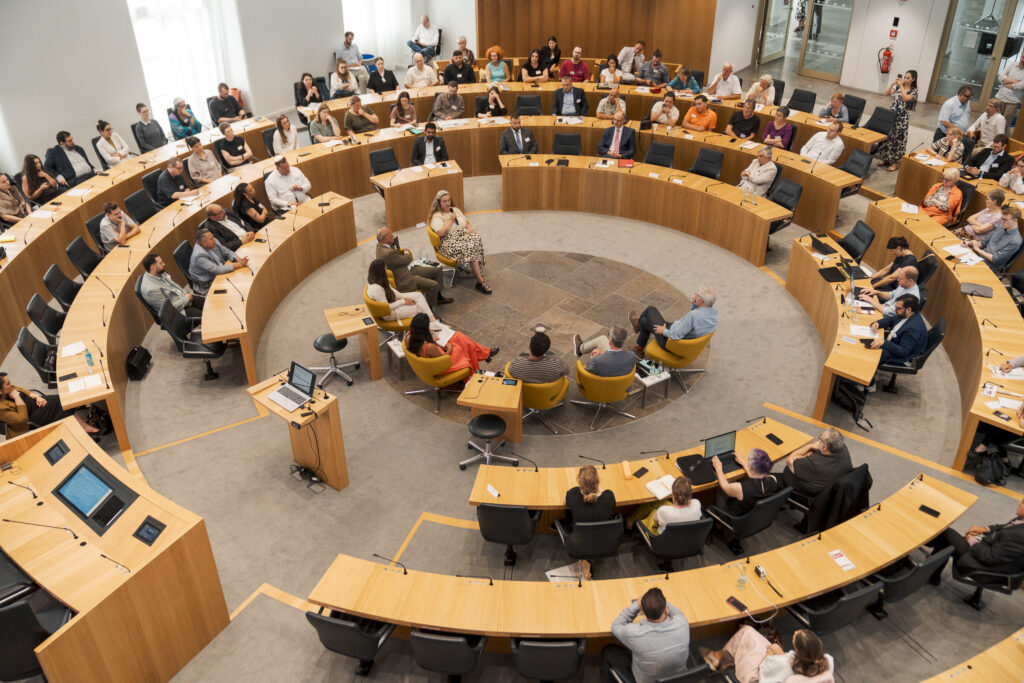
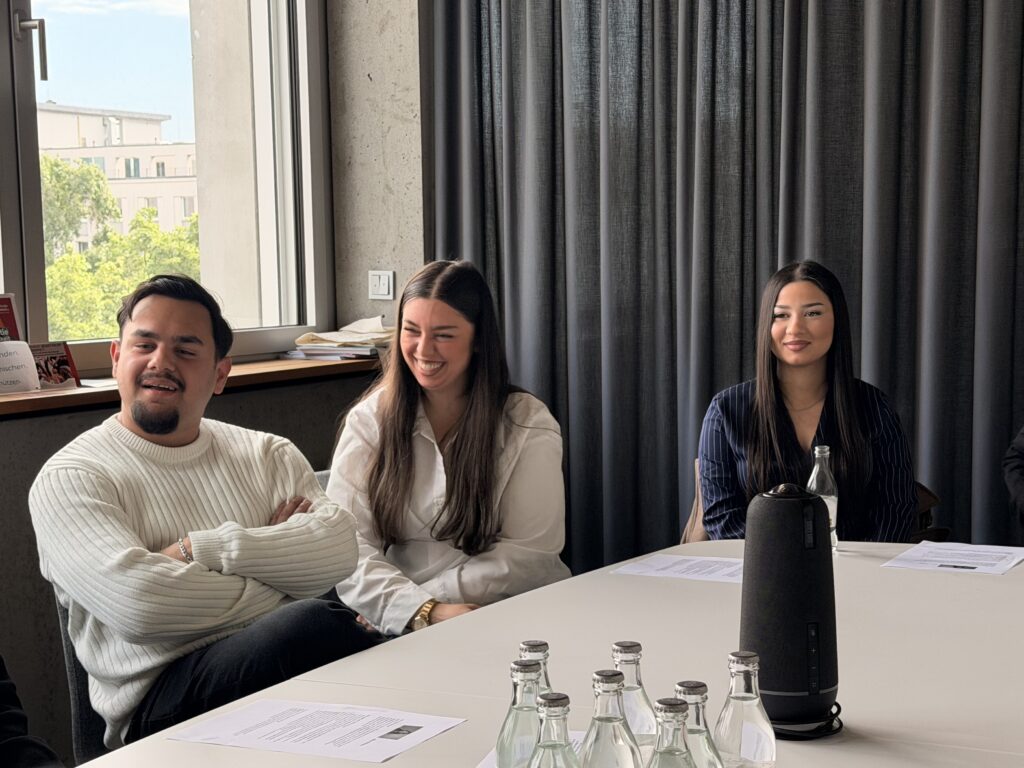
Die Auftaktveranstaltung des Bundeskongresses fand dieses Jahr im Landtag von Rheinland-Pfalz statt. Passend zum diesjährigen Kongressthema „Antiziganismuskritische Perspektiven in der Medienbildung“ drehte sich alles um die Darstellung und Wahrnehmung von Sinti und Roma in den Medien zwischen Stereotypen und Empowerment.
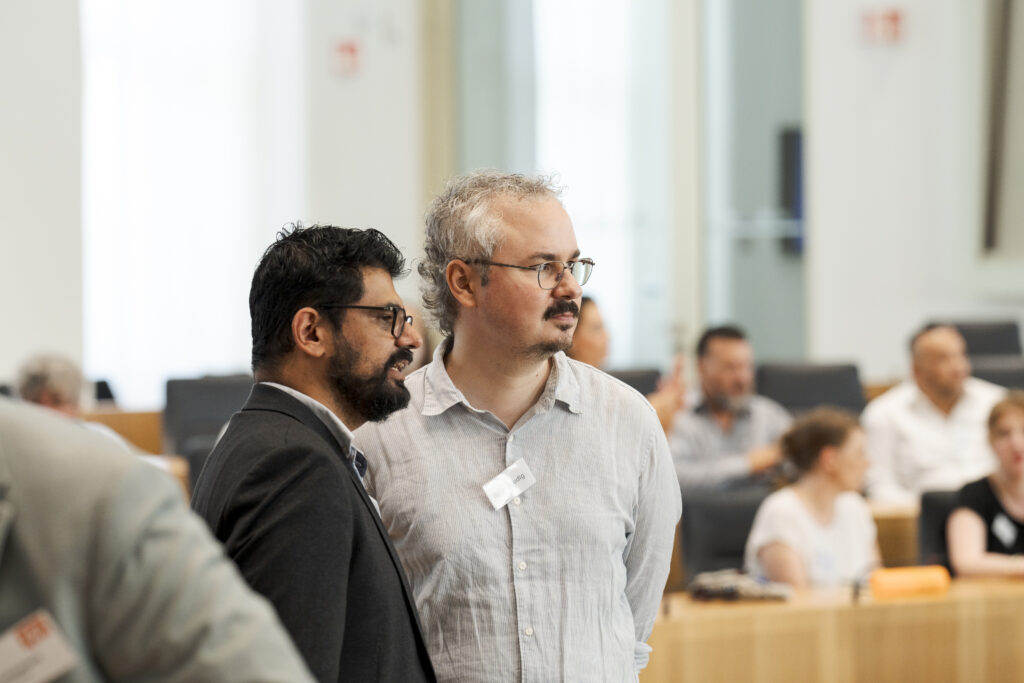
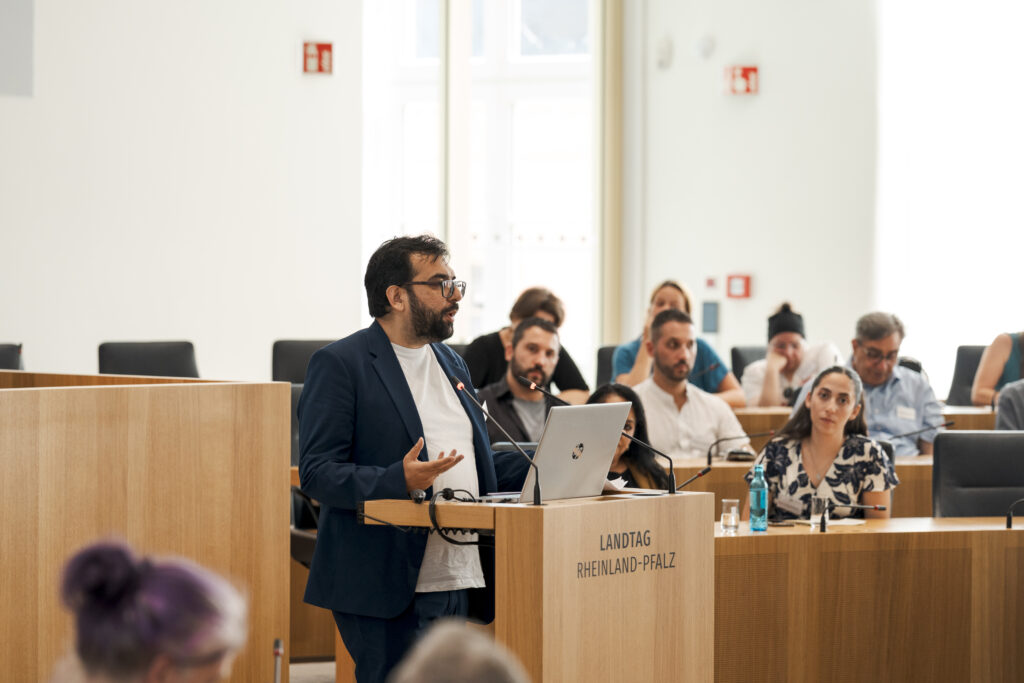
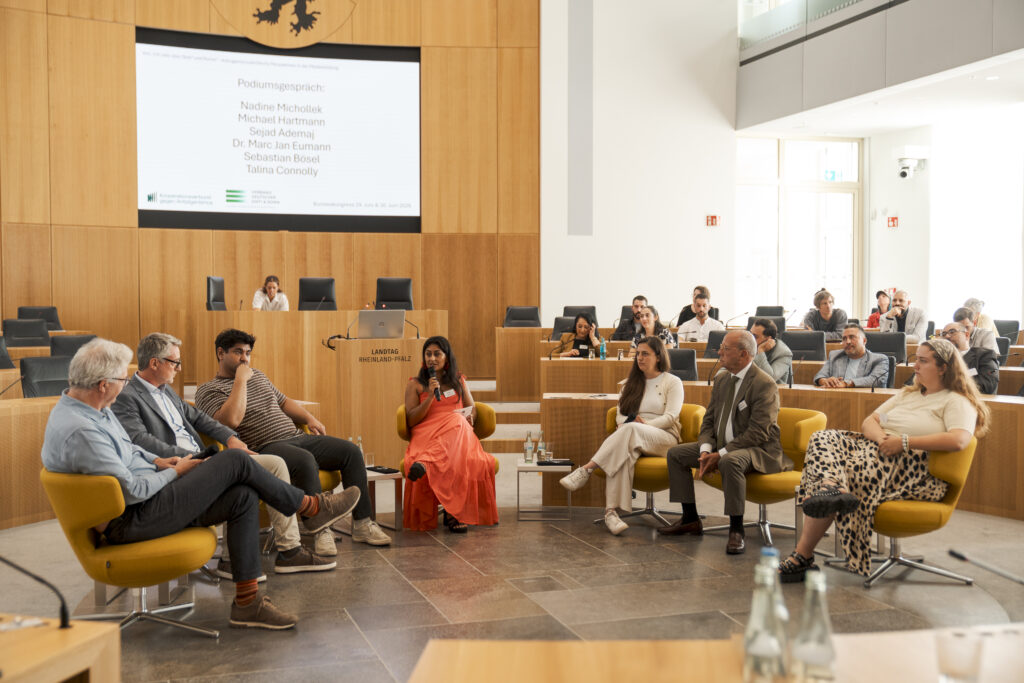
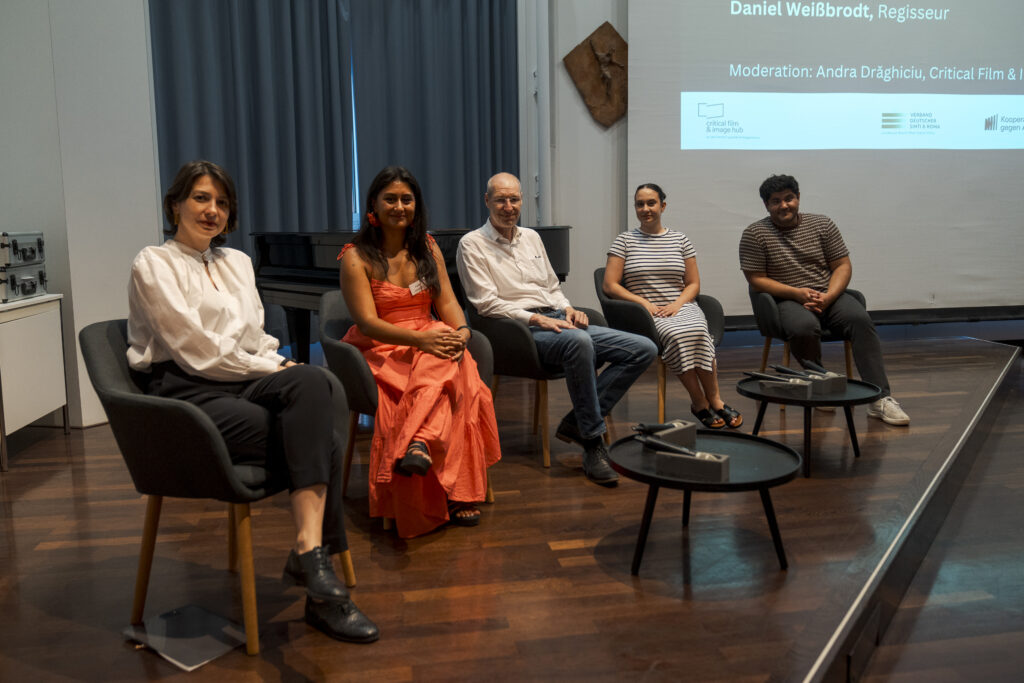
Vertreter*innen aus Politik und Wissenschaft, von Selbstorganisationen, Medienschaffende und Personen aus der Zivilgesellschaft kamen zu Wort. Neben spannenden Impulsvorträgen konnte einer Podiumsdiskussion gefolgt werden, die die Verantwortung von Politik und Medienschaffenden sowie Perspektiven aus der Minderheit selbst thematisierte.
Es gab Grußworte von
Jaqueline Rauschkolb, Vizepräsidentin des Landtags Rheinland-Pfalz
Gordon Schnieder, Ministerpräsident des Landes Rheinland-Pfalz
Michael Brand, Beauftragter der Bundesregierung gegen Antiziganismus und für das Leben der Sinti und Roma
fachliche Inputs von
Mustafa Jakupov, Melde- und Informationsstelle Antiziganismus (MIA)
Markus End, Zentrum für Antisemitismusforschung der TU Berlin
und Beiträge zur Podiumsdiskussion von
Nadine Michollek, freie Journalistin
Michael Hartmann, Antiziganismusbeauftragter des Landes Rheinland-Pfalz
Sejad Ademaj, Filmemacher
Marc Jan Eumann, Direktor der Medienanstalt Rheinland-Pfalz
Sebstian Bösel, Abteilungsleiter der aktuellen Landesredaktion beim SWR
Talina Connolly, Projektleitung für das Netzwerk Sinti Roma Kirchen,
moderiert von Adite Jasarova vom Verein RomAnity.
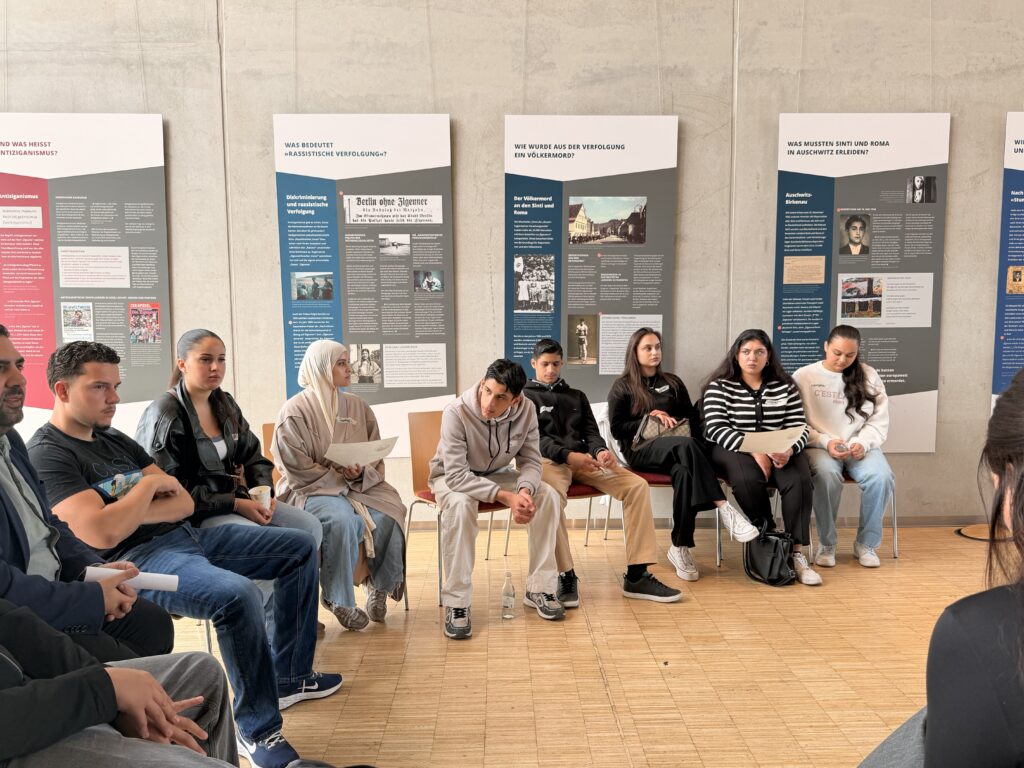
Den zweiten Tag verbrachten die Teilnehmer*innen im Tagungszentrum Erbacher Hof. Dort konnte in Arbeitsgruppen über Strategien gegen Hass im Netz, empowernde Selbstrepräsentation von Roma und Sinti in den Medien diskutiert werden. Außerdem wurde über den kritischen Umgang mit antiziganistischen Bildern, antiziganismuskritische Filmbildung und Erfahrungen und Strategien auf Grundlage antiziganismuskritischer Medienarbeit gesprochen.
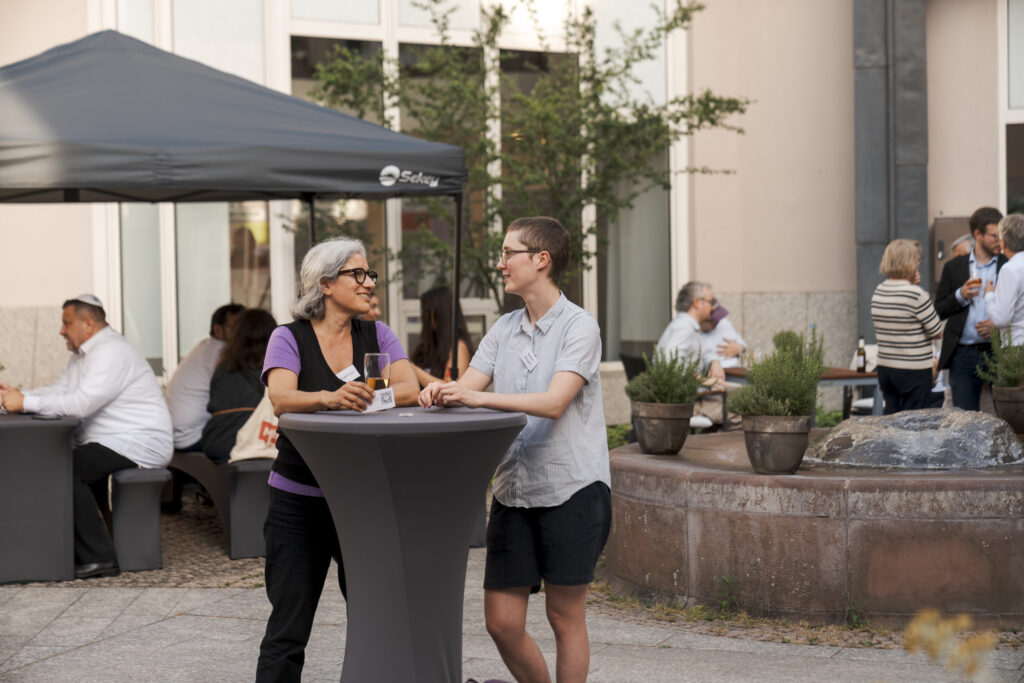
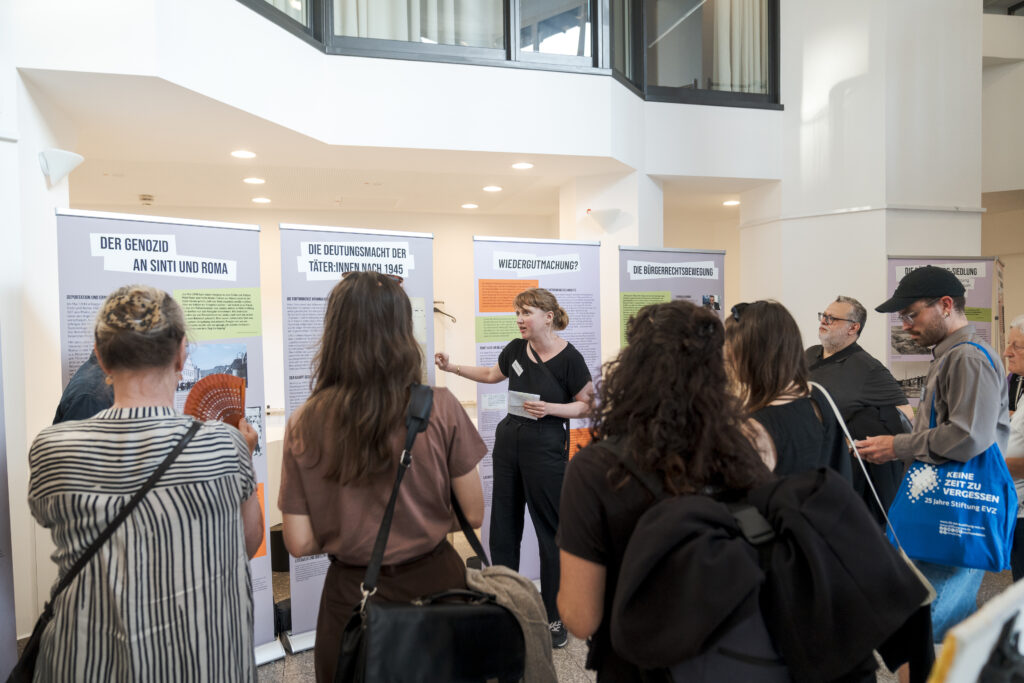
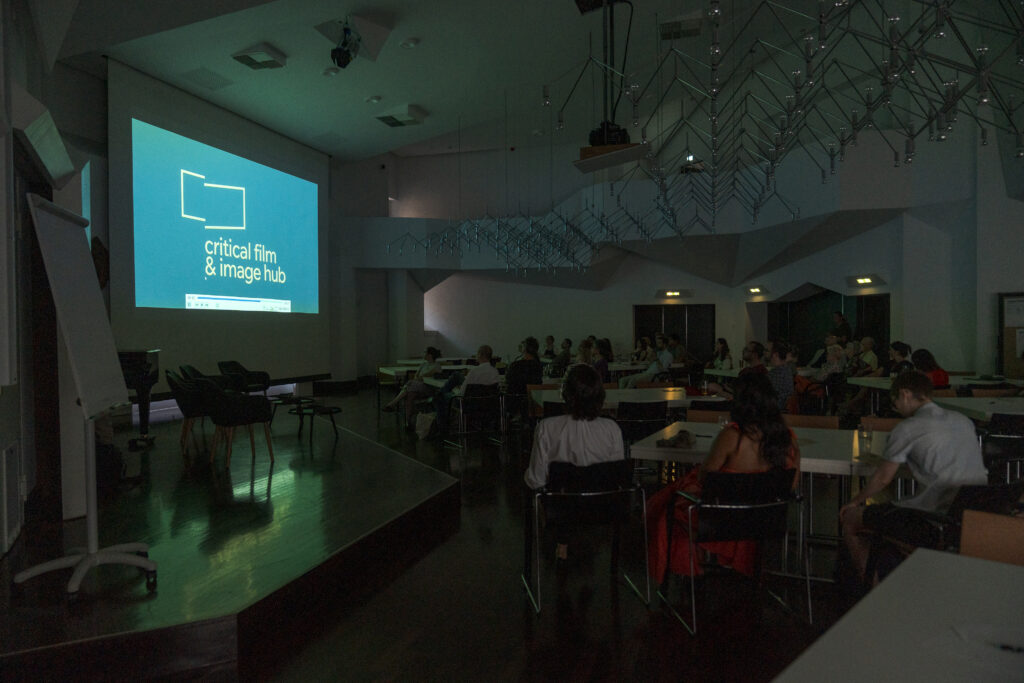
Begleitet wurde der Kongress von einem Markt der Möglichkeiten, einer Ausstellung, diversen Infoständen, Filmvorführungen und einem Abendprogramm mit Musik. In diesem Rahmen konnten sich die Teilnehmenden und Verbundpartner*innen kennenlernen und vernetzen.
Die Auftaktveranstaltung wurde in einem Livestream übertragen und auf unserem YouTube Kanal veröffentlicht.
Livestream Bundeskongress 2026
Eindrücke von der Einführungsveranstaltung im Landtag Rheinland-Pfalz
Der Bundeskongress wurde in diesem Jahr vom Kooperationsverbund gegen Antiziganismus in Zusammenarbeit mit dem Verband Deutscher Sinti und Roma Rheinland-Pfalz durchgeführt.
Der Kooperationsverbund gegen Antiziganismus wird durch das Bundesministerium für Bildung, Familie, Senioren, Frauen und Jugend im Rahmen des Bundesprogramms „Demokratie leben!“ gefördert wird.
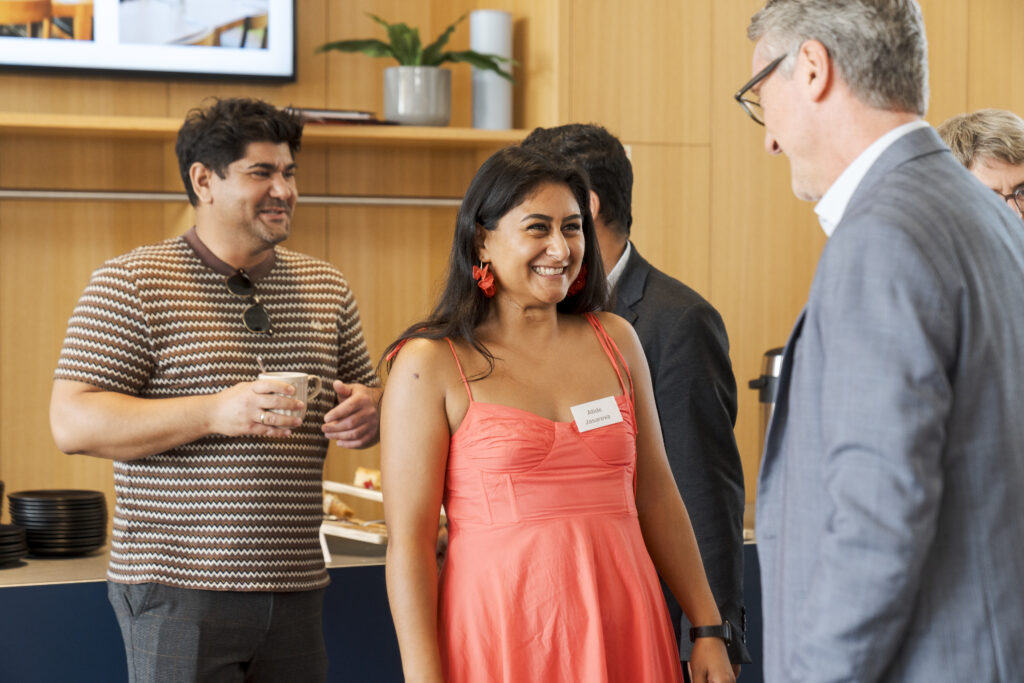
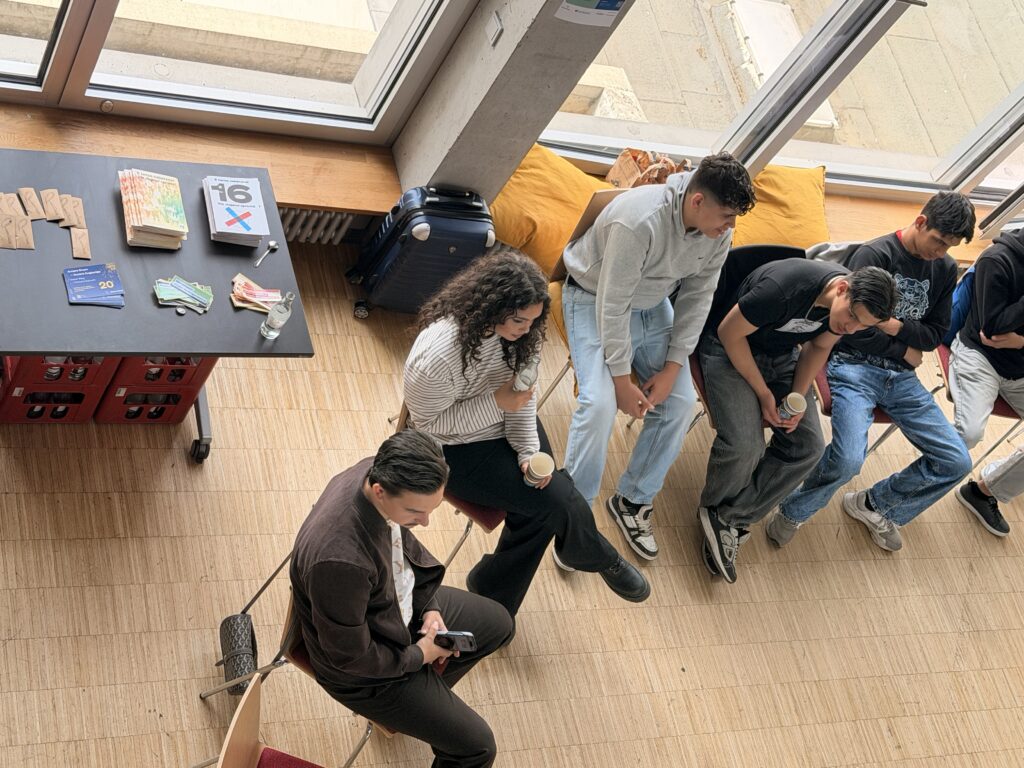
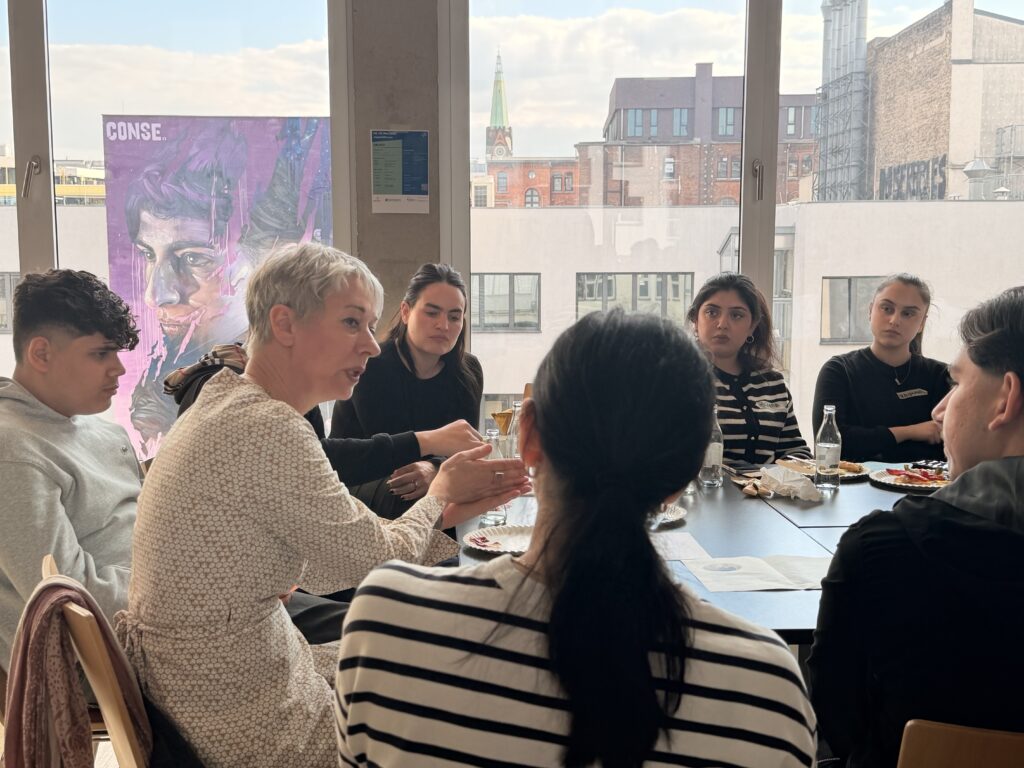
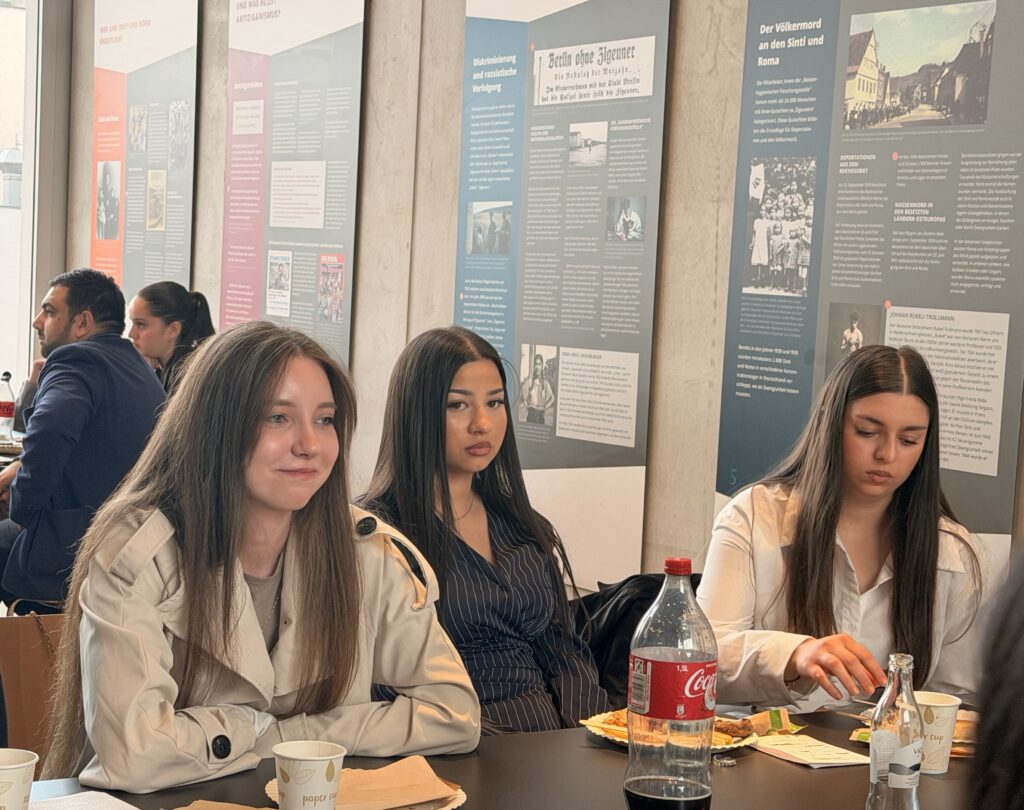
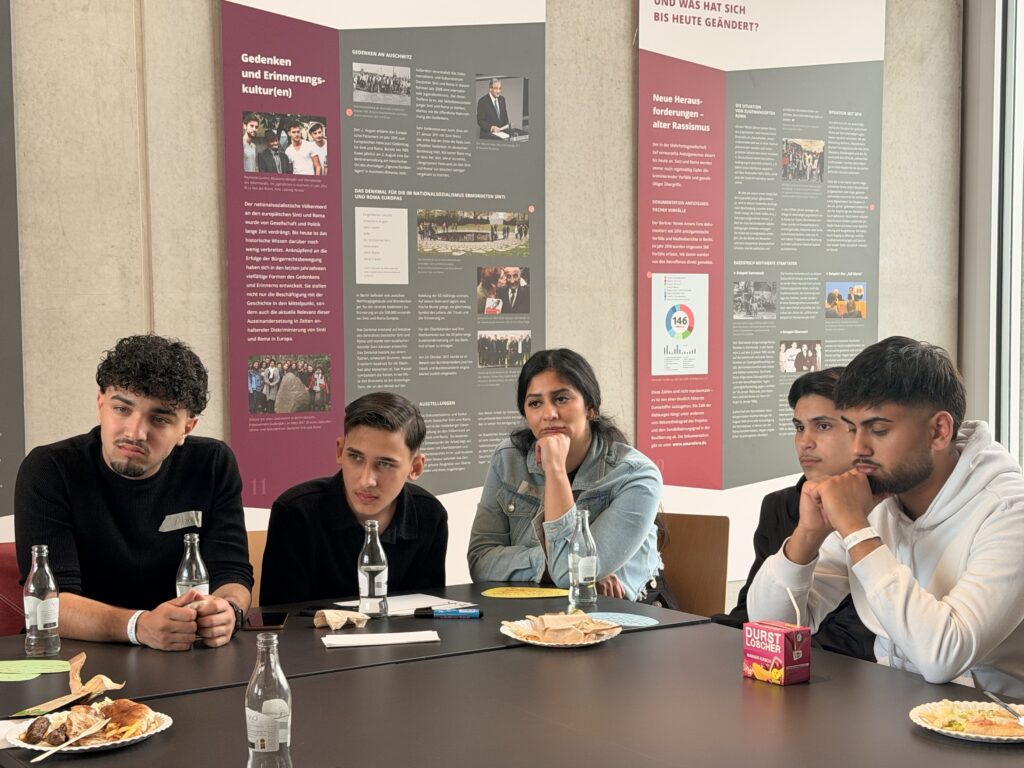
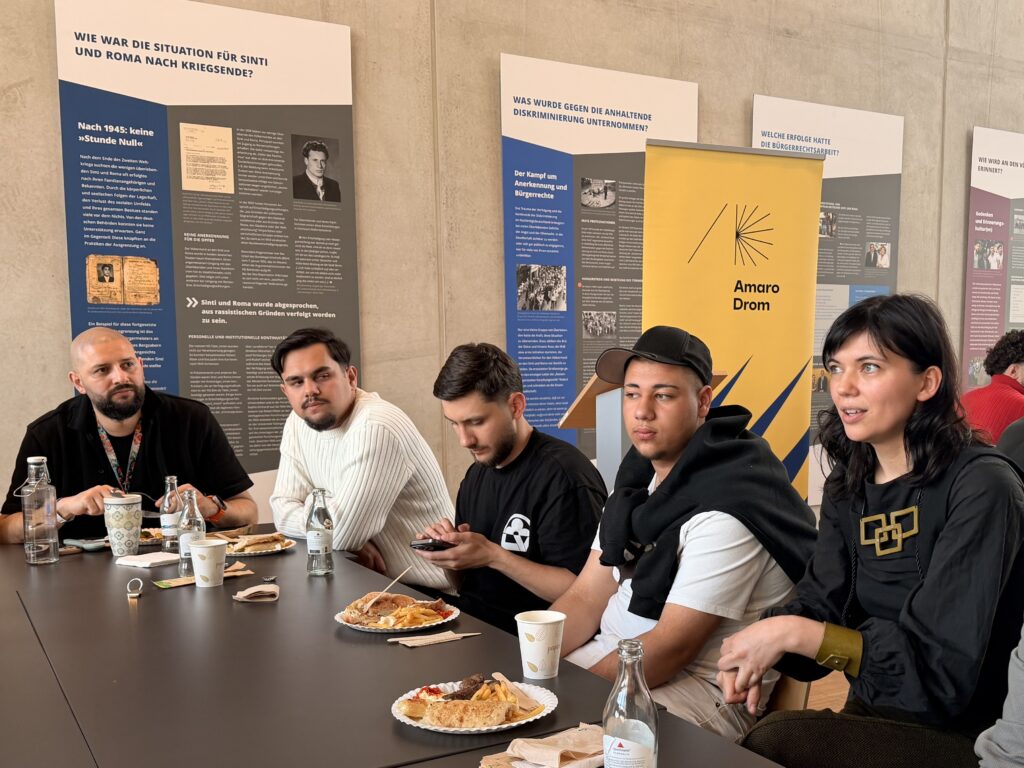
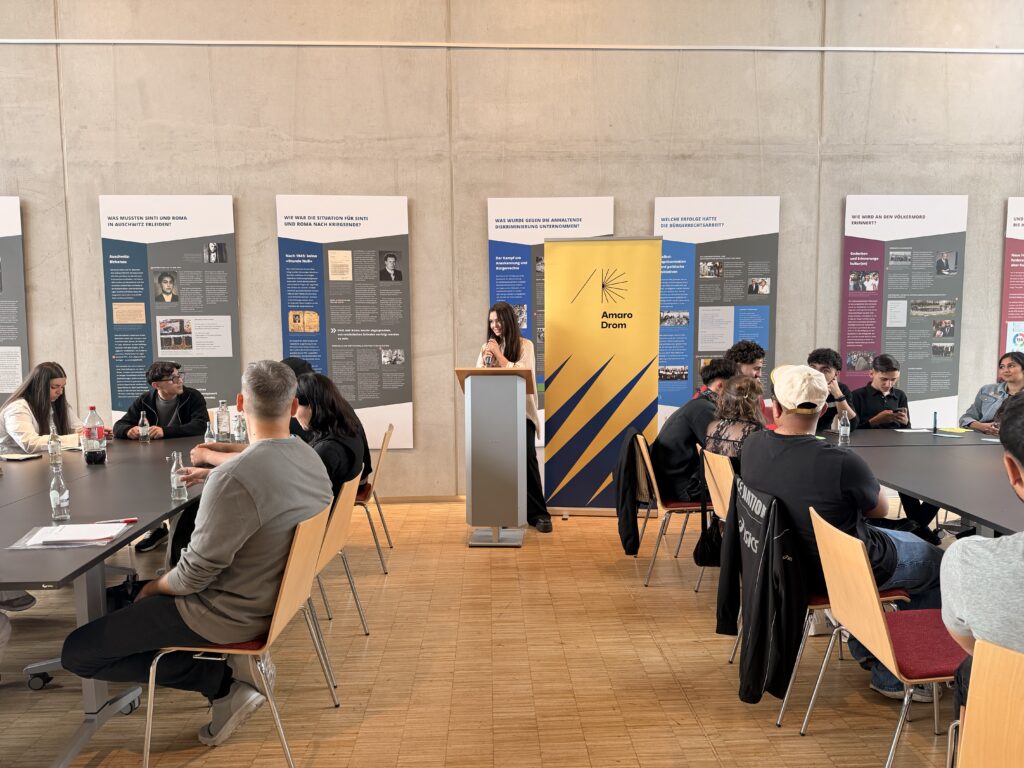
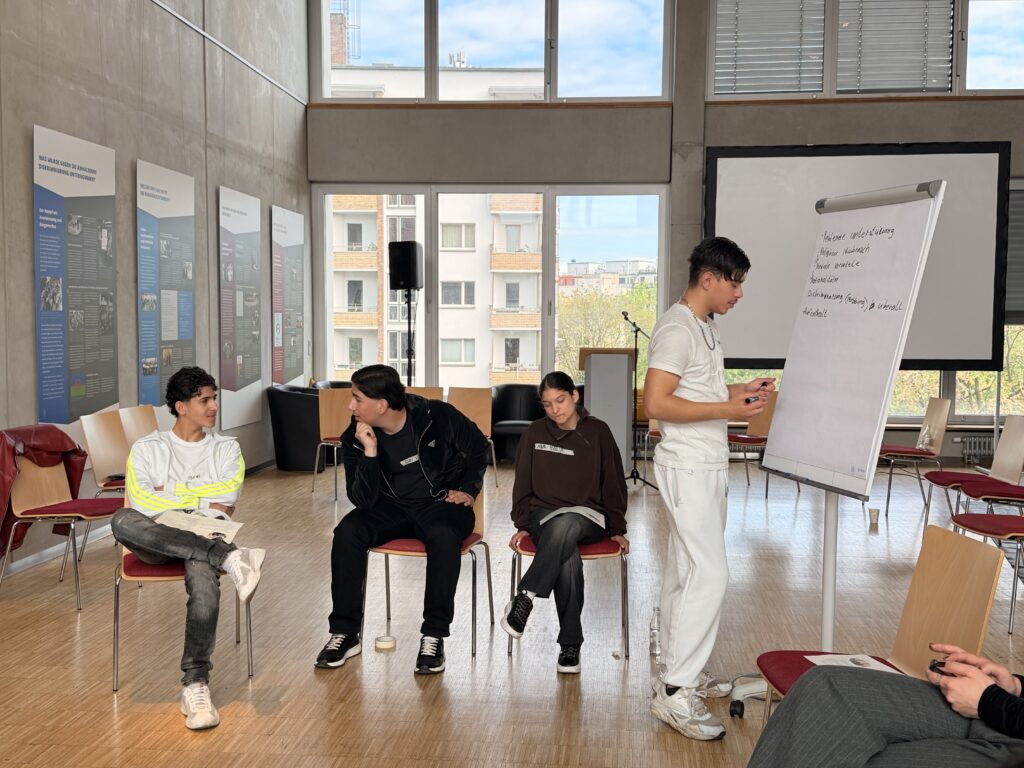
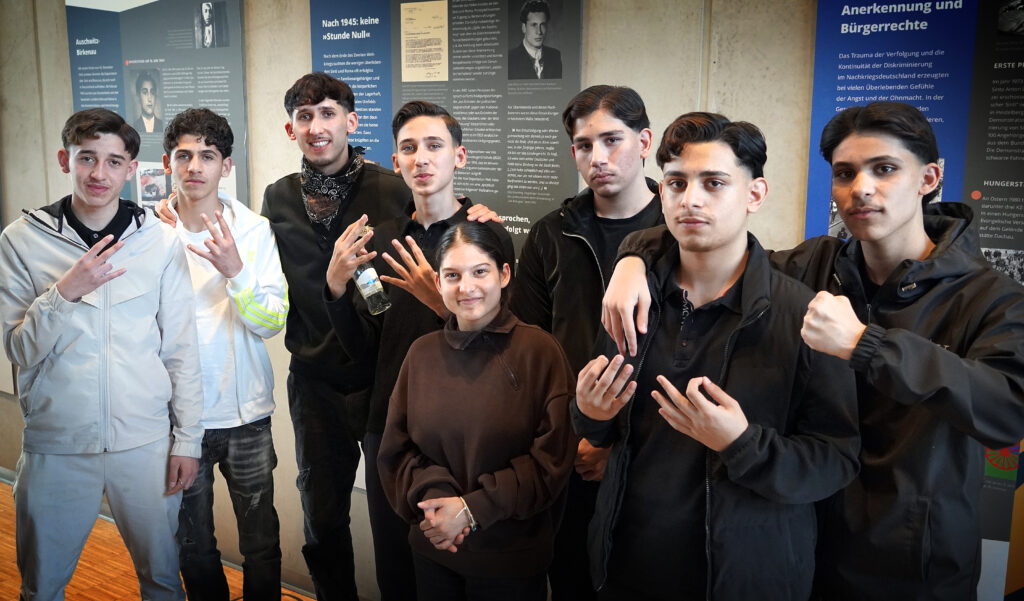
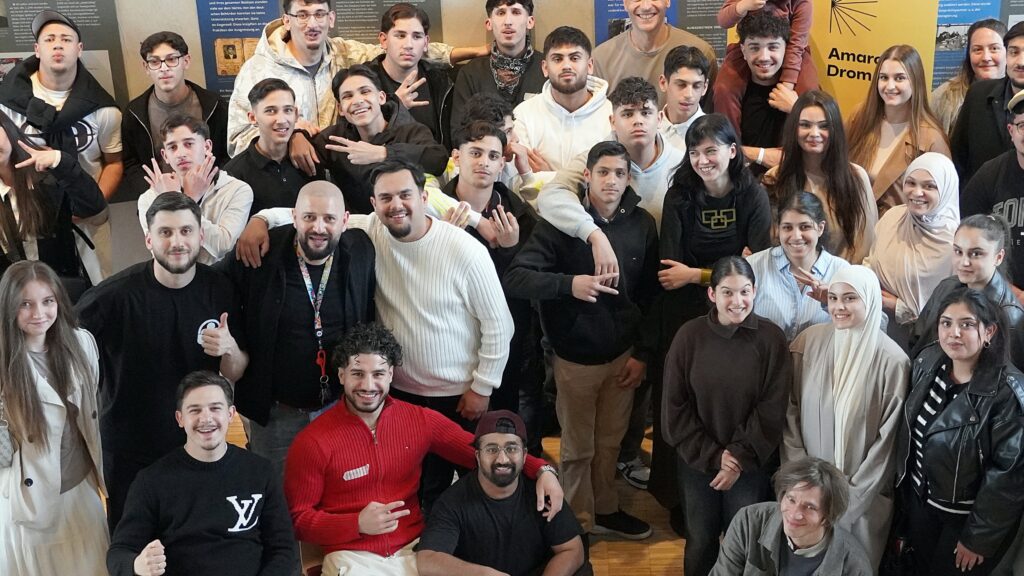
Auch dieses Jahr konnten etwa 30 Jugendliche in Berlin an unserem Jugendforum zur politischen Partizipation teilnehmen! Sie tauschten sich mit Personen der Öffentlichkeit über Politik in Berlin und Deutschland, die Bekämpfung von Antiziganismus und die Beteiligung junger Menschen aus.
In unserem Video bekommt ihr Eindrücke aus den Workshops und vom Dialog am Buffet mit Alina Voinea, Charlotte Neuhäuser und Susana Kahlefeld.
Am 09. Mai 2026 fand das dritte Jugendforum zur politischen Partizipation in Berlin statt. Etwa 30 Jugendliche tauschten sich mit Personen der Öffentlichkeit über Politik in Berlin und Deutschland, die Bekämpfung von Antiziganismus und die Beteiligung junger Menschen aus.
Wer waren unsere Gäste?
Alina Voinea ist in der politischen Jugend- und Bildungsarbeit aktiv und engagiert sich seit vielen Jahren gegen Rassismus. Als erste offizielle Ansprechperson zu Antiziganismus arbeitet sie seit März 2025 beim Land Berlin. Im Rahmen dieser Arbeit entwickelt sie unter anderem ein Konzept für Prävention, Beratung und Bildung im Bereich Antiziganismus. Dafür arbeitet sie eng mit dem Beirat für Angelegenheiten von Roma und Sinti und anderen zivilgesellschaftlichen Beratungsstellen zusammen.
Charlotte Neuhäuser ist seit 2025 Mitglied im Bundestag für Partei die Linke. Sie gehört zu den jüngsten Abgeordneten und setzt sich besonders für soziale Gerechtigkeit, Bildung und internationale Zusammenarbeit ein. Durch ihr Engagement gegen Ungleichheit und Diskriminierung bringt sie wichtige Perspektiven in politische Debatten, auch zu Themen wie Rassismus und Antiziganismus. Sie arbeitet im Bundestag in Ausschüssen zu internationaler Zusammenarbeit, Entwicklungspolitik und Friedensförderung.
Susanna Kahlefeld ist seit 2011 Abgeordnete im Berliner Abgeordnetenhaus für Bündnis 90/Die Grünen. Sie setzt sich für Demokratie, gesellschaftlichen Zusammenhalt und politische Teilhabe ein. Vor ihrer politischen Tätigkeit arbeitete sie viele Jahre als Lehrerin und war dadurch eng mit den Lebensrealitäten junger Menschen verbunden. In ihrer parlamentarischen Arbeit beschäftigt sie sich unter anderem mit Antidiskriminierung, Demokratieförderung und dem Schutz demokratischer Strukturen und ist beispielsweise im Ausschuss für Kultur, Engagement und Demokratieförderung aktiv.
Workshops und Austausch
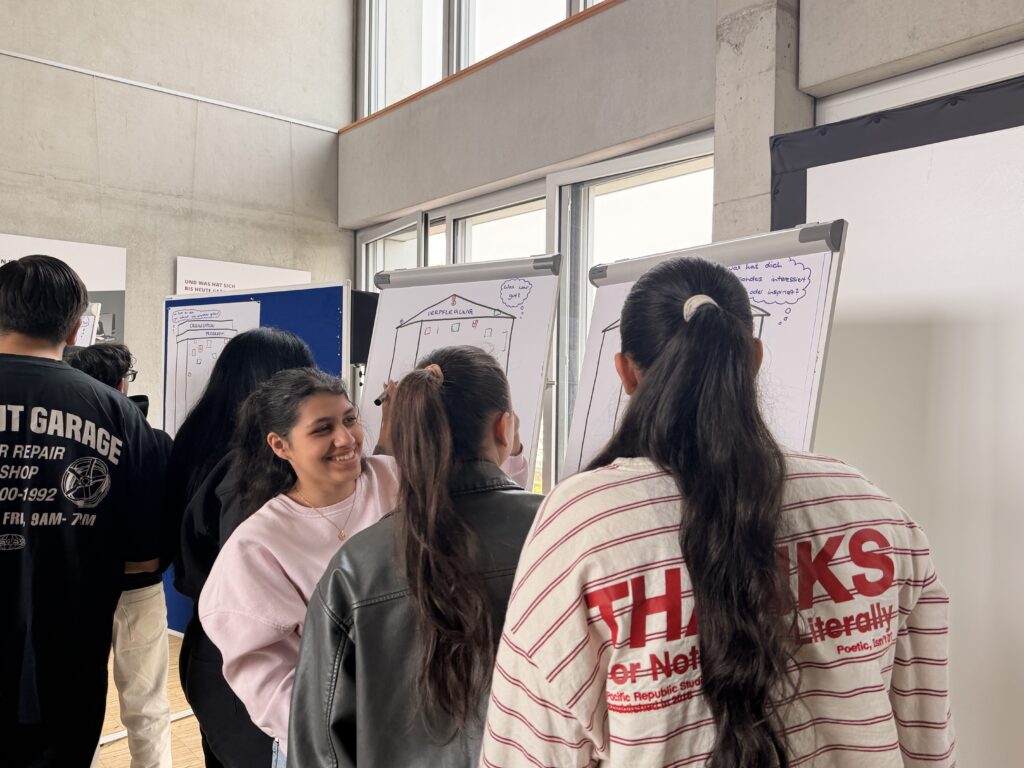
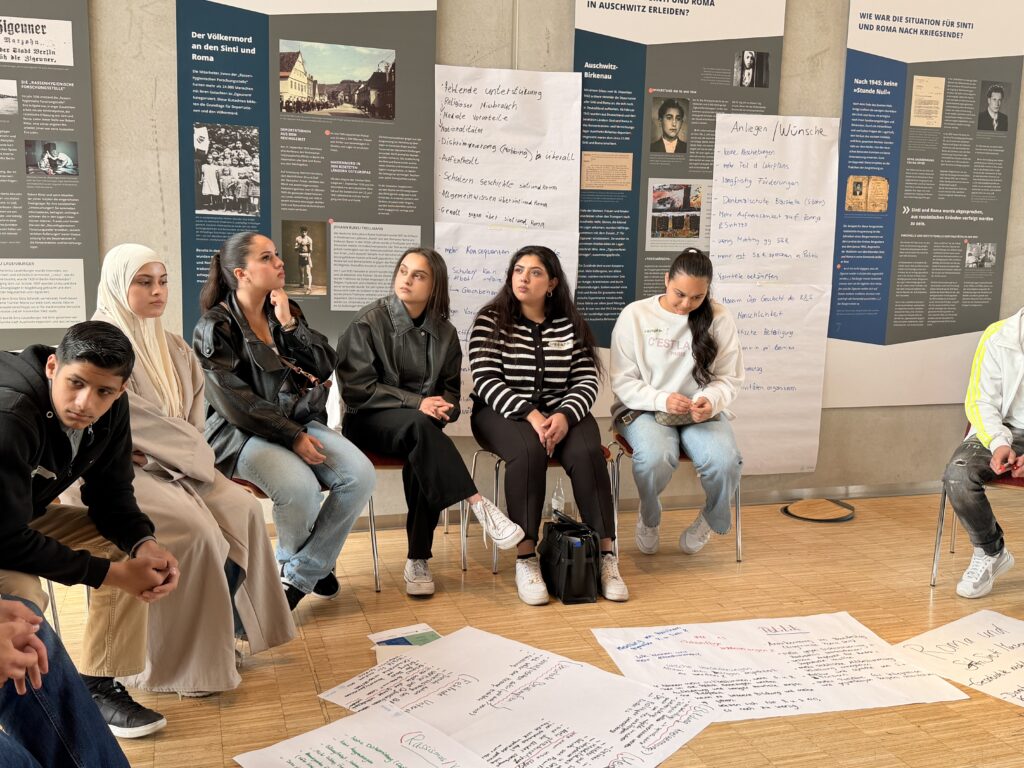
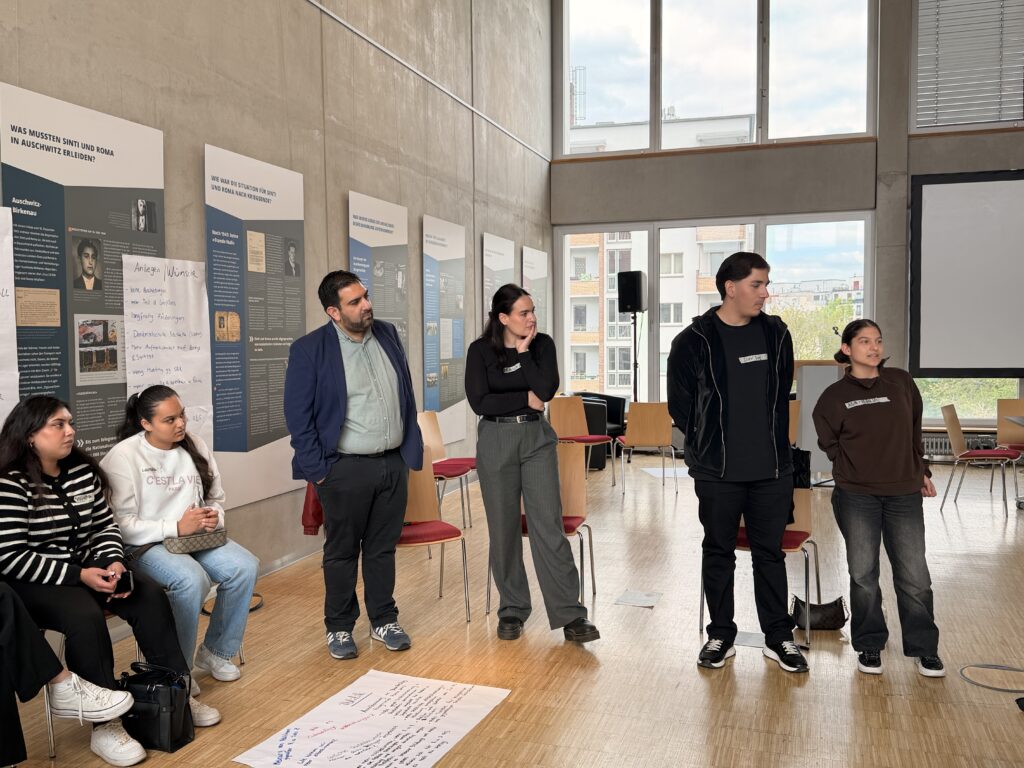
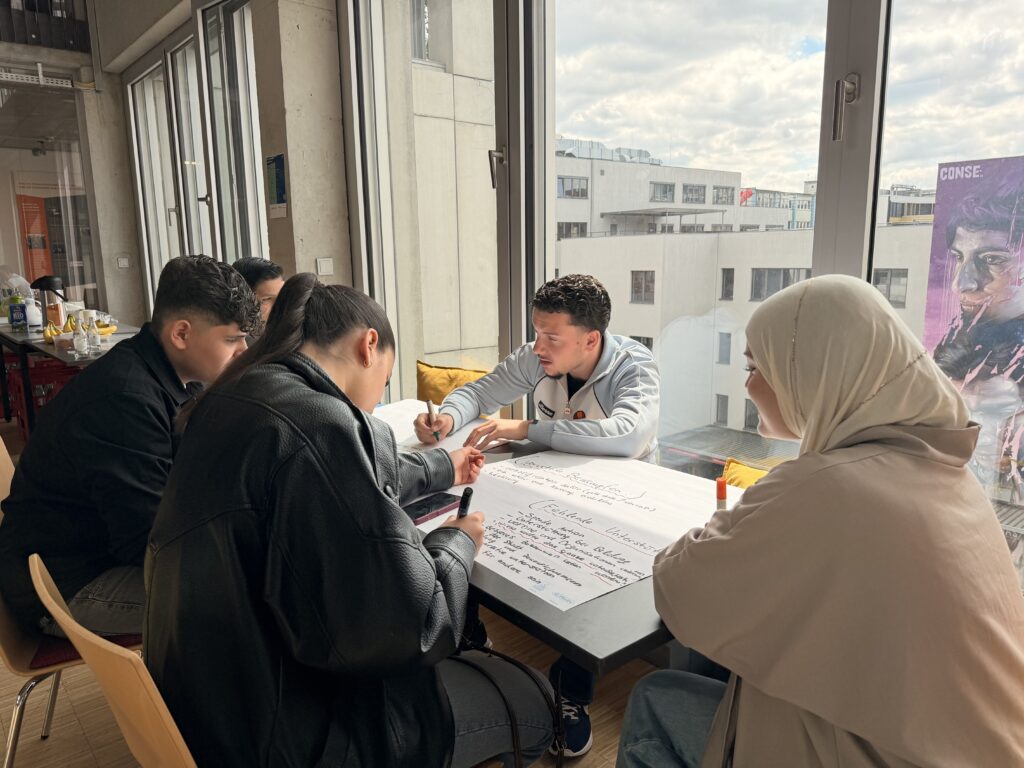
Der Samstag startete mit zwei Workshopphasen. Die Jugendlichen erhielten zunächst inhaltliche Inputs zu den eingeladenen Gästen und ihren Arbeitsfeldern. Anschließend hatten sie die Möglichkeit, sich auszutauschen, eigene Erfahrungen einzubringen und sich gemeinsam auf das bevorstehende Gespräch vorzubereiten. Dabei entwickelten sie Fragen, Forderungen und Themen, die sie in den Austausch einbringen wollten.
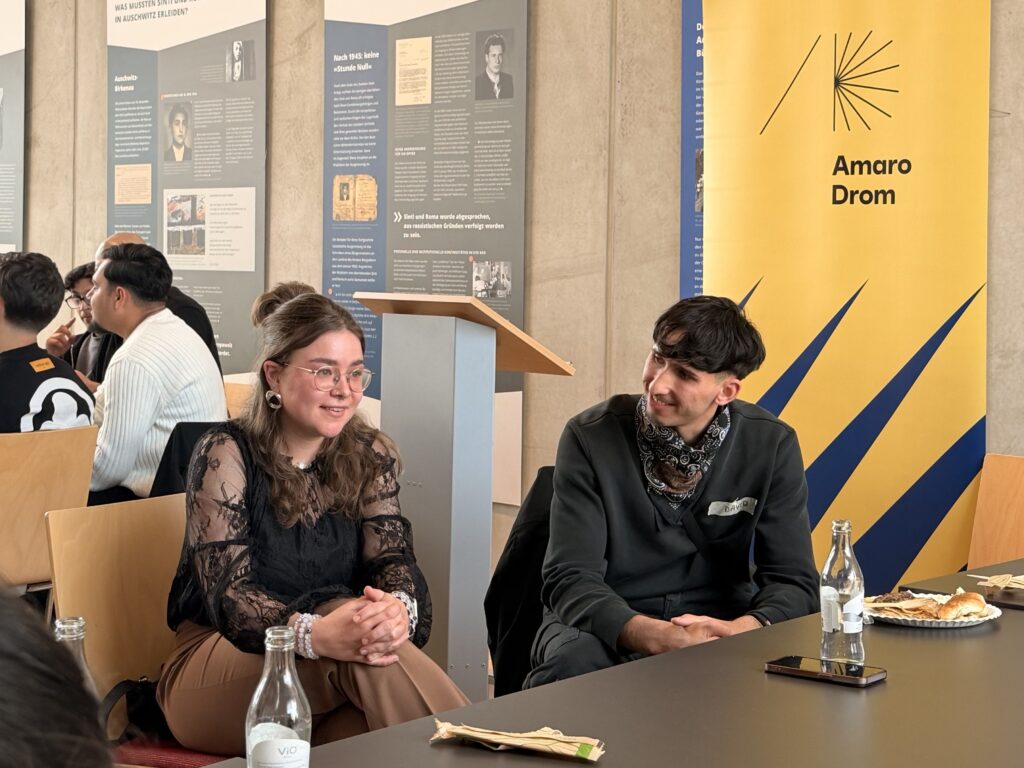
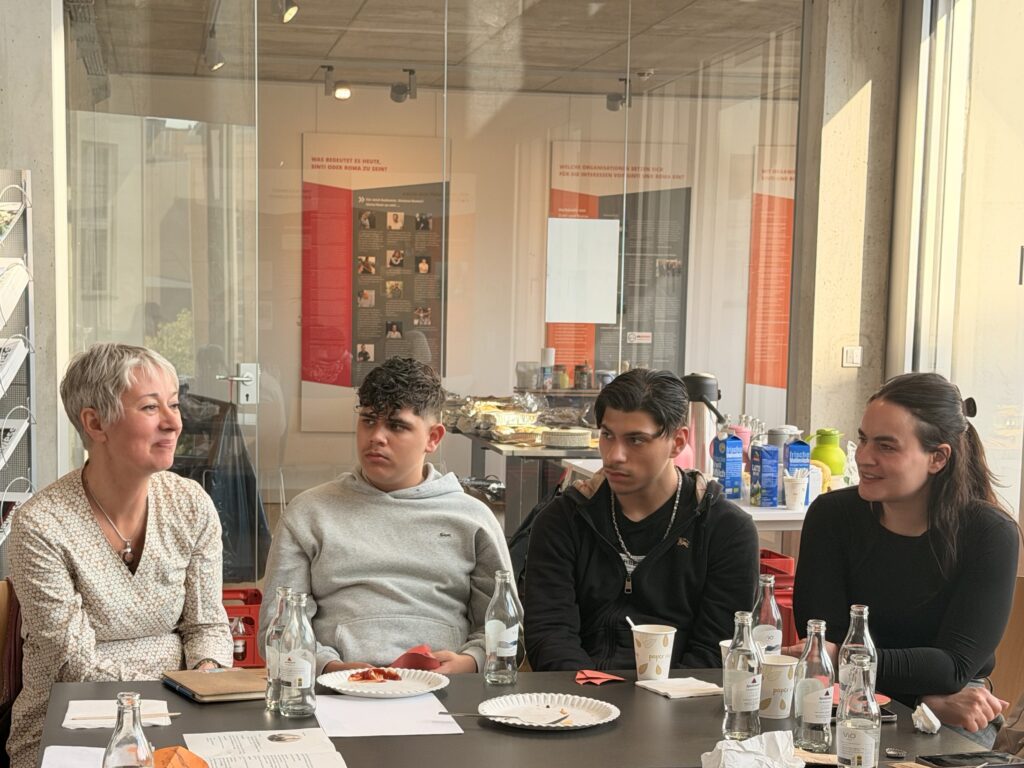
Später ging es zum Dialog am Buffet über. Unter dem Motto „Politik trifft Jugend“ konnten unsere Teilnehmenden Fragen und Forderungen äußern und ihre Perspektiven zu verschiedensten Themen teilen und diskutieren.
Dabei wurde unter anderem darüber gesprochen, wie sich die Gäste konkret für die Beteiligung junger Menschen sowie die Sichtbarmachung von Roma und Sinti einsetzen. Die Jugendlichen brachten zudem Forderungen nach mehr politischen Bildungsformaten, sicheren Räumen, stärkerer politischer Beteiligung und mehr Präsenz in Gremien ein sowie die Idee eines Museums zur Geschichte der Roma und Sinti. Auch aktuelle soziale und politische Herausforderungen standen im Mittelpunkt der Gespräche. Themen wie steigende Lebenshaltungskosten, sichere Renten- und Lebensperspektiven für junge Menschen, Veränderungen rund um die Wehrpflicht und die Frage, wie Jugendliche stärker zum Wählen motiviert werden können, spielten dabei eine wichtige Rolle. Darüber hinaus wurden Rassismuserfahrungen, gesellschaftliche Vorurteile gegenüber Roma und Sinti sowie Fragen rund um den Völkermord an Roma und Sinti, Wiedergutmachung und die Bedrohung des Denkmals in Berlin angesprochen.
Wie geht es weiter?
Wir bedanken uns bei allen Teilnehmer:innen, Gästen und Unterstützer:innen, die dieses Projekt ermöglicht haben. Antiziganismus ist nach wie vor Teil unseres Alltags und rechte Ideologien finden zunehmend wieder gesellschaftliche Akzeptanz. Gerade deshalb braucht es Räume, in denen die Perspektiven junger Menschen in den Vordergrund gestellt werden und in denen sie sich gegenseitig stärken und eine diskriminierungsfreie Gesellschaft fordern können.
Das Jugendforum wird im Rahmen des Bundesprogramms „Demokratie leben!“ gefördert. Angesichts aktueller Kürzungen im Bereich der Demokratieförderung sehen wir solche Räume jedoch zunehmend unter Druck. Umso mehr hoffen wir, das Jugendforum und ähnliche Formate auch in den kommenden Jahren weiterführen und jungen Menschen dauerhaft Möglichkeiten für Austausch, Beteiligung und Empowerment bieten zu können.
Eindrücke - das war unser Jugendforum zur politischen Partizipation 2026
Amaro Drom ist Teil des Kooperationsverbunds gegen Antiziganismus, der durch das Bundesministerium für Bildung, Familie, Senioren, Frauen und Jugend im Rahmen des Bundesprogramms „Demokratie leben!“ gefördert wird.
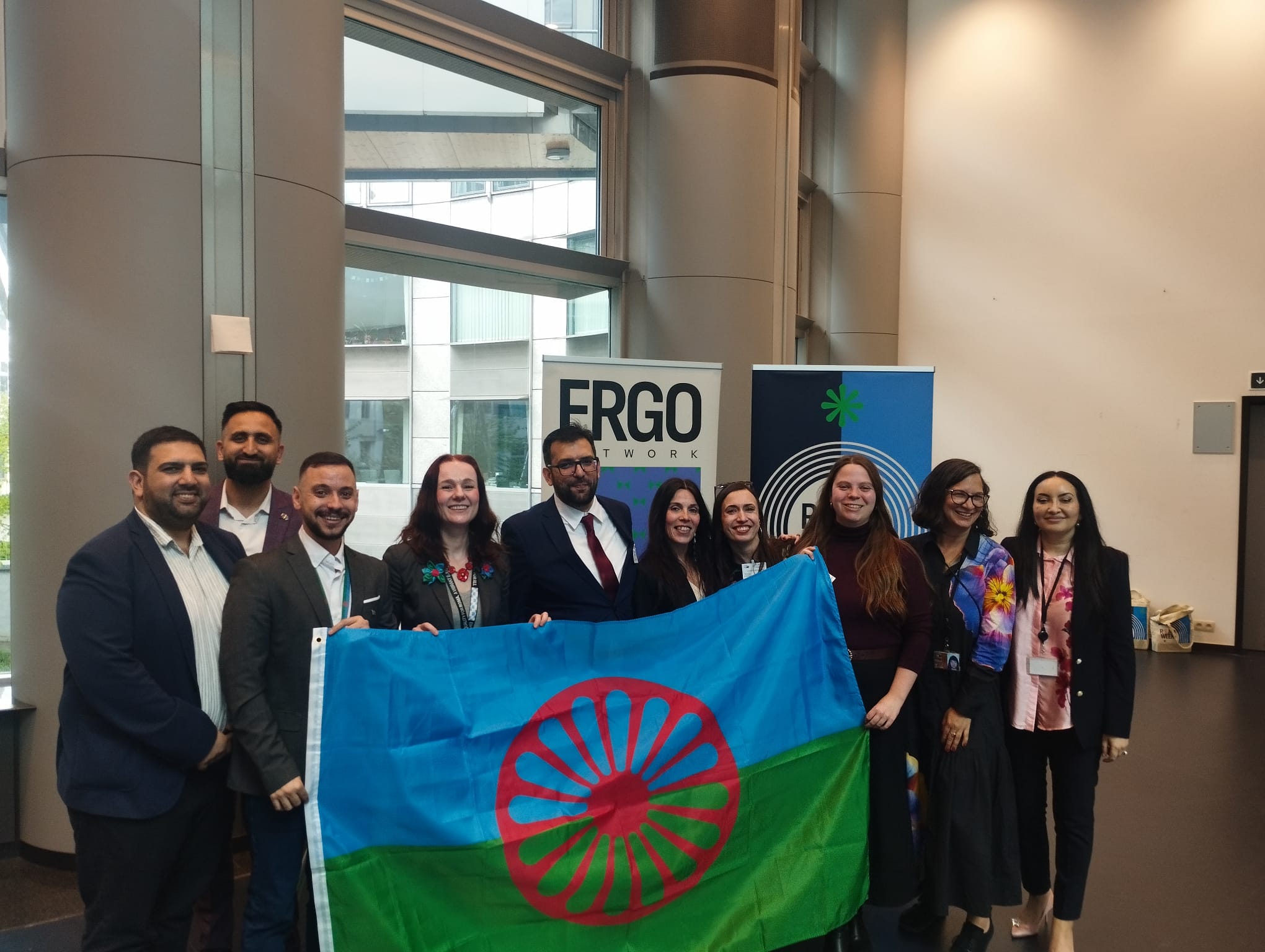
We participated in Roma Week 2026 in Brussels
Roma Week has been taking place annually in Brussels since 2016, around 8 April, the International Roma Day. It is organised by European institutions in cooperation with civil society organisations and brings together actors from politics, EU institutions, civil society and Roma communities. Its aim is to highlight the political and social situation of Roma in Europe, strengthen equality, participation and inclusion at EU level, and raise awareness of antigypsyism as a fundamental human rights issue.
This year, the Amaro Drom team once again took part in Roma Week from 20th to 22nd April and contributed to panels, expert discussions and dialogue formats. The programme focused on topics such as structural antigypsyism, education, remembrance of the genocide against Roma and Sinti, and political strategies at EU level. Through panels, workshops and discussions, concrete demands were formulated and perspectives from the communities were brought to light.
Beyond the formal sessions, informal formats such as evening events and smaller meetings created space for exchange and networking. These moments enabled direct dialogue between Roma youth and political representatives, connecting lived experiences with European policymaking.
—
Presentation of our TAAO project
—
A key moment for us was participating in a panel where Merdjan Jakupov and Konstantinos Gkantinas presented our project “Together Against Antigypsyism Online” (TAAO). As part of the project, young monitors from several EU countries collected and documented antigypsyist content on social media, which was then analysed by experts. In total, more than 3,000 posts were recorded. Many of them remained online despite containing dehumanising language and stereotypical portrayals.
The findings show how widespread antigypsyism is in the digital space and how insufficiently it has been addressed so far by platforms and policymakers. Roma and Sinti continue to be disproportionately targeted by hate speech, stereotyping and dehumanising narratives.
Online antigypsyism is not an isolated phenomenon. It reinforces existing prejudices, shapes public discourse and has direct consequences for the everyday lives of those affected.
This is why the issue must be addressed at European level. The EU Roma Strategy up to 2030 explicitly highlights the fight against antigypsyism as a key priority. The findings of TAAO contribute important evidence and outline concrete recommendations for more effective policy measures and stronger accountability.
At the same time, the presentation created space to highlight the perspectives of young Roma involved in the project and to bring their experiences into the European debate.
Das war auch 2025 wieder das Motto unseres Bundesjugendtreffens. Etwa 100 junge Roma und nicht-Roma konnten in Berlin an spannenden und kreativen Workshops teilnehmen, die gemeinsame Zeit genießen und ihre Stimme erheben. Wir freuen uns aufs nächste BJT mit euch!
In diesem Video könnt ihr euch die Meinungen der Jugendlichen und Eindrücke vom gesamten Wochenende ansehen.
On 27 March 2026, we hosted our national conference in Oberhausen as part of the EU project “Together Against Antigypsyism Online” (TAAO). Representatives from civil society, politics, and academia came together to discuss the findings of the German country report on online antigypsyism, share experiences from the monitoring process, and develop strategies to combat hate speech online.
The press releases in German and English can be found here.
Antigypsyism Online, Forms and Counterstrategies. Germany 2024-2025 Together Against Antigypsyism Online (TAAO) Report on Germany
The project Together Against Antigypsyism Online (TAAO) was carried out by Amaro Drom in cooperation with partner organizations from six European countries from March 2024 to February 2026. Its goal was to identify and analyze antigypsyist online hate speech and to develop strategies together to combat this form of discrimination. Data on online hate speech was collected, awareness-raising activities were implemented, and young people were trained in monitoring and reporting, with the aim of changing narratives about Roma in the digital space and making actions and strategies visible.
The full project report is now available in German and English. It summarizes the results, analyzes the key findings, and shows what has been achieved in the fight against antigypsyist online hate speech.
Von, mit oder über Sinti* und Roma*? Antiziganismuskritische Perspektiven in der Medienbildung
Wie werden Sinti* und Roma* dargestellt, wie wird über die Minderheit gesprochen? Wer kommt zu Wort und wer wird ausgeschlossen? Medienkritik war stets eine zentrale Aufgabe im Kampf gegen Antiziganismus. Doch Medien bieten auch Chancen für Aufklärung, Sensibilisierung und Empowerment.
Der Bundeskongress 2026 ist dem Verhältnis von Antiziganismus und Medien gewidmet. In Diskussionen und Gesprächen, auf und abseits der Bühne, in Vorträgen und thematischen Workshops wollen wir die Wechselwirkungen antiziganistischer Strukturen und medialer Reproduktion verstehen, Gegenstrategien und empowernde Medienpraktiken erkunden.
Der Kooperationsverbund gegen Antiziganismus ist ein Zusammenschluss aus fünf Trägern, die vom Bundesministerium für Bildung, Familie, Senioren, Frauen und Jugend (BMBFSFJ) im Rahmen des Bundesprogramms „Demokratie leben!“ seit 2025 im Handlungsfeld „Aufbau einer bundeszentralen Infrastruktur“ gefördert werden.
Ziel des Kooperationsverbundes ist es, die bundesweite Präventionsarbeit gegen Antiziganismus sowie das Empowerment von Sinti* und Roma* zu stärken.
Die Träger des Kooperationsverbundes sind:
das Dokumentations- und Kulturzentrum Deutscher Sinti und Roma mit dem Projekt Bildungsforum gegen Antiziganismus (Koordinierungsstelle des Kooperationsverbundes)
Amaro Drom e.V.,die interkulturelle Jugendselbstorganisation von Roma und Nicht-Roma
Hier findet ihr das Programm sowie die Anmeldung zum Bundeskongress. Wir freuen uns auf eure/Ihre Teilnahme!
Employer: Amaro Drom e.V.
Project: Together Against Antigypsyism Online (TAAO), funded by the Citizens, Equality, Rights and Values (CERV) programme.
Contract duration: November 1, 2025 – April 15, 2026
Allocated workload: 20 working days
Background
Amaro Drom is acting as the lead coordinator for the „Together Against Antigypsyism Online“ (TAAO) project, a multi-national initiative aimed at monitoring and combating antigypsyist hate speech across European digital spaces. As the project approaches its final phases, Amaro Drom is seeking a dedicated research expert to lead its comprehensive internal evaluation.
Tasks and responsibilities
The selected expert will be responsible for leading the entire internal evaluation lifecycle, specifically focusing on assessing the project’s structural integrity, administrative efficiency, and pedagogical efficacy. The core responsibilities include:
Preparing the research methodology: Finalizing the evaluation framework and designing the necessary research instruments (written questionnaires, semi-structured interview protocols, and focus group guides).
Implementing the methodology: Executing the data collection phase across the consortium. This includes administering questionnaires to project team members, conducting interviews with key management staff, and facilitating focus groups with the youth hate speech monitors.
Writing the final report: Synthesizing the qualitative and quantitative data into a comprehensive final research analysis that extracts deep organizational learning and actionable recommendations for the consortium.
Timeline and deliverables
Contract start date: November 1, 2025
Research implementation: All methodological implementation and data collection (interviews, focus groups, and questionnaires) must be finalized by the end of March 2026.
Final deliverable: The completed research analysis and evaluation report must be delivered to Amaro Drom no later than April 15, 2026.
Required qualifications
Demonstrated, hands-on experience working directly with Roma NGOs and civil society organizations.
Proven expertise in designing research methodologies, conducting qualitative/quantitative evaluations, and analyzing complex project data.
Excellent communication and report-writing skills.
Application procedure
Interested candidates who meet the required profile should submit to the email international@amarodrom.de their application containing the following documents:
An updated Curriculum Vitae (CV).
An application letter outlining your relevant experience, particularly your work with Roma NGOs, and your approach to this evaluation.
Application deadline: October 25, 2025
For more informations you can sent us an email to the same email address international@amarodrom.de
Betroffener von polizeilichem Hundebiss 2020 am 4. Februar in den Kosovo abgeschoben – Das Roma Büro Freiburg sammelt Spenden
Am 28. April 2020 kam es in Umkirch bei Freiburg zu einem Polizeieinsatz bei einer Roma-Familie wegen eines mutmaßlich falsch geparkten Autos. Obwohl von der Familie keine Gewalt ausging, setzte die Polizei einen Diensthund ein. Der Hund biss den Familienvater Mohammed D. schwer am Arm.
Mohammed D. musste mehrere Stunden notoperiert werden. Eine gerichtliche Aufarbeitung des Einsatzes fand nicht statt. Die Staatsanwaltschaft sah kein öffentliches Interesse an einem Verfahren.
Am 28. Januar 2026 wurde Mohammed D. festgenommen und am 4. Februar 2026 in den Kosovo abgeschoben, nachdem er über 30 Jahre in Deutschland lebte. Damit wird eine nachträgliche Aufklärung des Polizeieinsatzes erheblich erschwert.
Wir fordern eine rechtliche Überprüfung der Abschiebung von Mohammed D. und eine unabhängige Aufklärung der mutmaßlichen Polizeigewalt.
Das Roma Büro Freiburg sammelt Spenden für Rechtsanwaltskosten, eine erste Unterbringung und Essen. Wir danken euch für jede Unterstützung.